Reads the raw device
Bypassing the file system means a re-formatted or corrupted partition can still reveal the files you thought were gone.
Scan any Mac-friendly drive block-by-block, preview recovered files as you go, and restore your data without touching the source volume.
Bypassing the file system means a re-formatted or corrupted partition can still reveal the files you thought were gone.
From ProRes and CinemaDNG to Office docs and Lightroom libraries, the scanner hunts for file structures—not just extensions.
Cherry-pick individual files, or recover a whole folder to your destination drive and search it with Spotlight.
Attach the disk, camera card, or image file you want to examine. Mac Data Recovery Guru opens it read-only so nothing is touched.
Scan a volume, a whole device (which works even when the volume no longer mounts), a disk image, or a single folder.
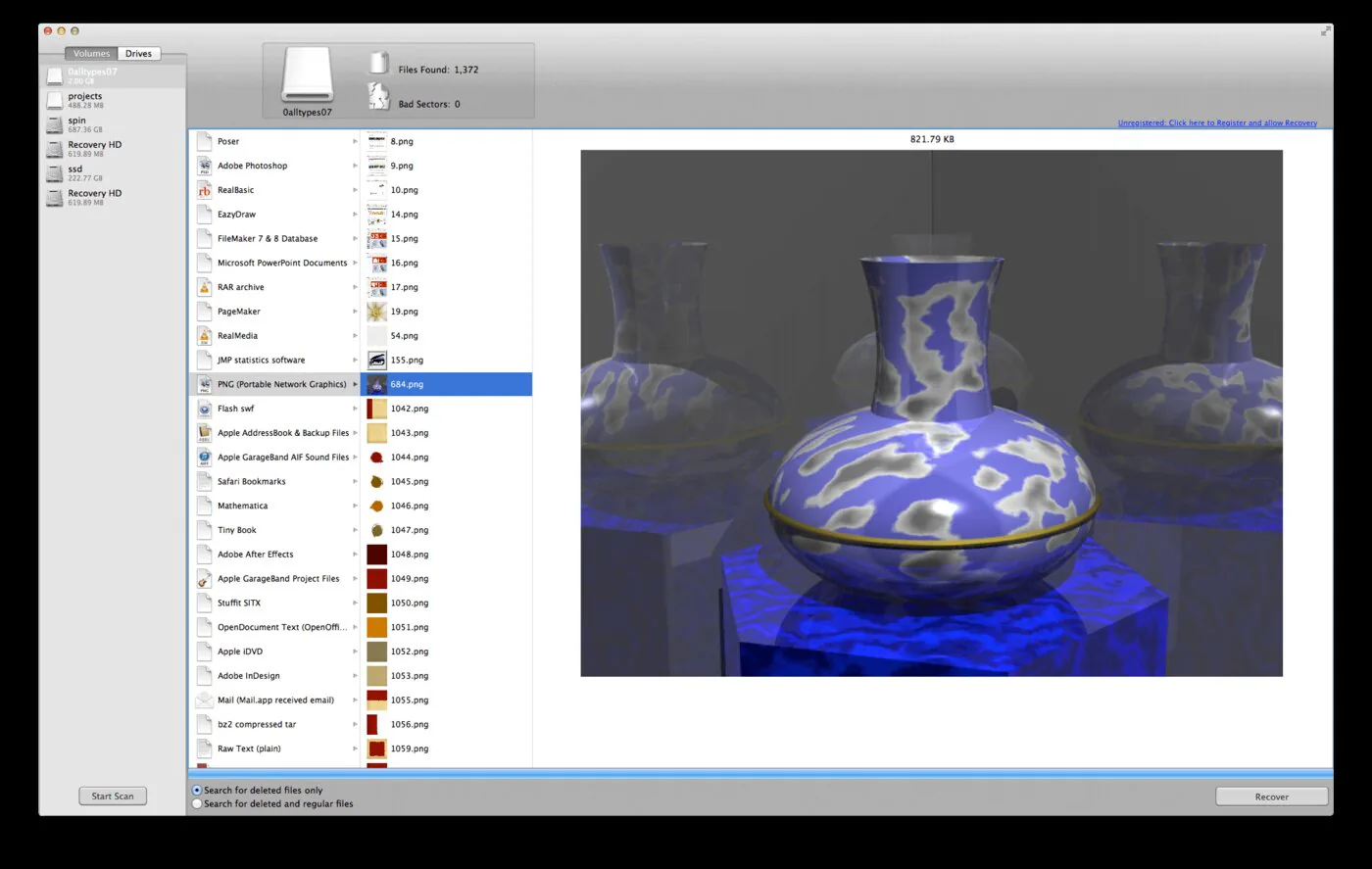
Browse the recovered hierarchy in a column view, watch thumbnails appear, and double-check metadata before you restore.
Export what you need to a secondary drive. The original media stays untouched so you can rerun scans or try other tools later.
Need help deciding which scan to run? Send us the scenario and we’ll point you to the right workflow.
Mac Data Recovery Guru reads drives and camera cards at the block level, searching for the real-world signatures that define hundreds of professional and consumer file formats. That means you can recover data even after a drive has been reformatted or partially overwritten—and you see the results in the same column view you use in Finder.
We’ve built recovery and forensics tools for macOS for over a decade. The same engine spent years in forensics work with government agencies before coming back to the shareware market. If you’re trying to bring back a camera card or a lost project, Mac Data Recovery Guru is usually your best first pass before you send the media to a lab.
Want the detailed walkthrough? Step through the annotated screenshots of a full scan and recovery.
Whether you’re handling family photos or client drives, reach out. Share the scenario, the media type, and what you’ve tried—we’ll suggest the safest next move.